
Edward Elgar Publishing is a leading independent academic and professional publisher with a strong focus on the social sciences and legal fields. They publish 400 book and journal titles annually and have successfully created a prestigious list of over 7,000 titles with the aim of enriching and supporting the academic and professional communities through creative commissioning and effective dissemination of high calibre content for a global audience, and by delivering a dynamic, responsive and efficient publishing service to authors, readers and customers.
The company was founded by its current Chairman, Edward Elgar, and remains an independent family business.
Edward Elgar Publishing was conceived as an international scholarly press focusing on topics of global interest.
Elgar titles are, on average, some of the most highly cited books in their respective subject fields. Validating a thoughtful approach to publishing, marketing and dissemination.

TITLES

THE CULTURAL THEORY OF CORRUPTION
Institutions, Cognition, and Organizations
Genre:
Economy & Politics, Society
Author:
Davide Torsello
Rights avail:
All except sold
Based on 12 years of research on corruption across the globe, this book presents four empirical case studies which illustrate the cultural, cognitive, and social implications of corruption. Davide Torsello examines the socio-institutional, organizational, and cognitive-hermeneutical aspects of the cultural theory model of corruption.

QUESTIONING HUMANITY
Being Human in a Posthuman Age
Genre:
Psychology, Society
Author:
Thomas Osborne, Nikolas Rose
Rights avail:
All except sold
Questioning Humanity explores what it means to be human today and in the future, drawing from the natural, human, and life sciences. Osborne and Rose challenge conventional ideas, examining post-humanism, human evolution, AI, and the boundaries between humans and animals. The book tackles pressing issues like climate-driven extinction and the ethics of a rapidly changing world. Engaging and thought-provoking, it is essential reading for students and scholars in social, cultural, and biological disciplines.

WORKPLACE COMMITMENTS (Concise Introduction to)
Genre:
Economy & Politics
Author:
John P. Meyer
Rights avail:
All except sold
This concise introduction by leading scholar John P. Meyer explores a timely global issue —employee commitment— and offers proven appeal across academic and professional audiences

THE IDEA OF TECHNOLOGICAL INNOVATION
A Brief Alternative History
Genre:
Economy & Politics, Society
Author:
Benoît Godin
Rights avail:
All except China, Japan, Korea, Taiwan
This timely book explores technological innovation as a concept, dissecting its emergence, development and use.
Benoît Godin offers an exciting new historiography of the subject, arguing that the study of innovation originates not from scholars but from practitioners of innovation.


The ECONOMICS of ARTIFICIAL INTELLIGENCE
A Normative Assessment
Genre:
Economy & Politics
Author:
Imad A. Moosa
Rights avail:
All except sold
This timely book analyses AI’s disruptive impact on economies, wages, and inequality, challenging optimistic narratives. Blending data and theory, Moosa warns of job losses outpacing gains, urging proactive policies to curb AI’s threats. By dissecting regulations, geopolitics, and sectoral risks, it equips scholars and policymakers to navigate AI-driven upheaval. Essential reading for rethinking economics in the age of intelligent machines.

HAPPIMETRICS
Leveraging AI to Untangle the Surprising Link Between Ethics, Happiness and Business Success
Genre:
Economy & Politics, Business & Management
Author:
Peter A. Gloor
Rights avail:
All except sold
Groundbreaking and innovative, Happimetrics will be an invaluable resource for scholars and students in the fields of business analytics, information systems and organizational innovation. It will also be useful for HR professionals and AI developers who are looking to use predictive analytics to measure workforce performance.

TAXING ARTIFICIAL INTELLIGENCE
2nd Edition
Genre:
Law
Author:
Xavier Oberson
Rights avail:
In this insightful book, a fully updated edition of the author’s Taxing Robots, Xavier Oberson explores taxing Artificial Intelligence (AI) as a potential response to rising workplace disruption and inequality as the use of AI across the economy continues to grow.

THE RISE OF ALGORITHMIC SOCIETY AND THE STRATEGIC ROLE OF ARTS AND CULTURE
Genre:
Economy & Politics, Business & Management
Author:
Luciana Lazzeretti
Rights avail:
All except sold
Illustrating the development of Artificial Intelligence (AI) and changes it has generated in the economy, society and culture, this expansive book continues the debate concerning the digital revolution and the rise of the algorithmic society.

VICTIMOLOGY (Advanced Introduction to)
Genre:
Society, Law
Author:
Sandra Walklate
Rights avail:
All except sold
Examining key concepts in victimology and placing them in their policy context, this book is an essential reading for students, scholars, and policy makers looking for a rich, critical, and interdisciplinary understanding of victimology.

A BRIEF HISTORY OF ECONOMIC THOUGHT
From the Mercantilists to the Post-Keynesians
Genre:
Economy & Politics
Author:
Hassan Bougrine, Louis-Philippe Rochon
Rights avail:
All except China, Japan, Korea, Taiwan
RIGHTS SOLD: Turkish
An introduction to the development of economic discourse for those seeking a different perspective than the traditional linear explanation of the development of modern orthodox economics.

CLIMATE ECONOMICS 3rd Edition
Economic Analysis of Climate, Climate Change and Climate Policy
Genre:
Economy & Politics
Author:
Richard S.J. Tol
Rights avail:
All except sold
Rights Sold: Greek
This book is an essential text for students in economics, climate change, and environmental policy, an excellent resource for researchers and practitioners, and a key text to support professors in their teaching.

UNDERSTANDING MODERN MONEY THEORY
Money and Credit in Capitalist Economies
Genre:
Economy & Politics
Author:
Randall Wray
Rights avail:
All except China, Japan, Korea, Taiwan
RIGHTS SOLD: Turkish
Randall Wray examines the vital role of credit and state money in capitalism, tracing money's evolution. This book updates his previous theories to address key modern economic questions.


UNDERSTANDING ECONOMIC INEQUALITY
Bigger Pies and Just Desserts
Genre:
Economy & Politics
Author:
Todd A. Knoop
Rights avail:
All except China, Japan, Korea, Taiwan
In Understanding Economic Inequality, the author brings an economist’s perspective informed by new, groundbreaking research on inequality from philosophy, sociology, psychology, and political science and presents it in a form that it is accessible to those who want to understand our world, our society, our politics, our paychecks, and our neighbors’ paychecks better.
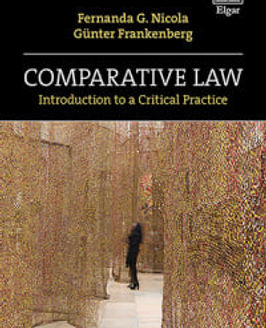
COMPARATIVE LAW
Introduction to a Critical Practice
Genre:
Law
Author:
F. Nicola, G. Frankenberg
Rights avail:
All except sold
Rights sold: Italian
This book provides a practical introductory guide to comparative law. Fernanda G. Nicola and Günter Frankenberg present and examine conventional and critical approaches to legal comparison, exploring its ramifications in the field and political effects.

RELIGION AND PUBLIC ADMINISTRATION
An Introduction
Genre:
Economy & Politics
Author:
Edoardo Ongaro and Michele Tantardini
Rights avail:
All except sold
This book explores the global impact of Hinduism, Buddhism, Confucianism, Shintoism, Judaism, Christianity, and Islam on public administration. Using an international and comparative approach, it analyzes the social and public dimensions of religion, employing a methodologically agnostic perspective. The book offers a unique theoretical lens to examine how religions influence organizational dynamics, public service motivation, bureaucratic discretion, government funding, and social cohesion. Valuable for students, scholars, and policymakers, it provides fresh insights into the relationship between religion and public administration.

Advanced Intro to THE POLITICS OF INTERNATIONAL HUMAN RIGHTS
Genre:
Economy & Politics
Author:
David P. Forsythe
Rights avail:
All except China, Japan, Korea, Taiwan
Adopting a politically realistic and historically informed perspective, this Advanced Introduction will be a valuable resource for students of human rights, international relations, and political science.

A PRAGMATIST THEORY OF ECONOMIC REASON
Justifying Theories Being Taught in Business Schools
Genre:
Economy & Politics, Philosophy
Author:
Alexander Styhre
Rights avail:
All except sold
This book argues for a new understanding of economic rationality, grounded in practical reason and language use, rather than solely on traditional empirical evidence or abstract utility theory. Styhre calls for holistic, logically consistent, and plausible theories of rationality that emphasize shared understandings and practical effects.

A WORLD HISTORY OF POLITICAL THOUGHT
Second Edition
Genre:
History, Politics
Author:
J. Babb
Rights avail:
All except sold
RIGHTS SOLD: Greek
J. Babb discusses how he came to write A World History of Political Thought:
One long-standing criticism of the political thought and philosophy, not to mention literature and art, is that it only reflects the viewpoint of “Old Dead White Guys”. This complaint has been raised again in recent years by those who demand to know “Why is my curriculum so white?” and seek to “decolonize the curriculum”. This movement is important but the problem is not as easy to solve as one might think.
Consider the history of political thought. History is about dead people so any history is going to have that problem. Not all thinkers were old when they began to put forward their key ideas though most were when they acquired followers. Whiteness is a problematic category because one can imagine some of the ancient Greeks and Romans might have had dark skin but I guess the notion is that the key thinkers usually taught are all European in some sense. The point about the lack of women is well-taken but if they were denied the opportunity to engage in political thought, how can one discuss their views meaningfully? The same applies to the non-elite because most thinkers were part of the elite, speaking to the rest of the elite, for the benefit of the elite. Male and elite voices have been dominant throughout most of world history so this is difficult to escape.
A lot of work has been done to make political thought and philosophy more diverse historically but these have had their limitations. Books have tended to deal with small pieces of the problem such as a neglect of women or specific regional thinkers. The greatest progress has been in the study of East Asia, with the Middle East/ North Africa and India not far behind. Often this material has constituted a chapter in an edited volume that was only a token effort to acknowledge the existence of non-Western, non-male or non-elite thought. Usually, non-Western perspectives were ghettoized and overwhelmed by the main focus on men, the elite and the West. Another problem is that attempts at comparative thought also often stop well short of the present but there is a need to make clear the present relationship between Western and non-Western thought now or the continuing problem of ignoring the non-West will persist.
A few years ago I was asked if it would be possible to write “A World History of Political Thought” and my initial reaction was that it would be impossible. Nonetheless, the idea gnawed at me for a few days before I sat down to draw up a list of political philosophers from throughout world history. The Western ones were easy—Plato, Aristotle, and so on—this is the bread and butter of the curriculum from my student days and as a profession academic. I was also very familiar with the key thinkers from East Asian political thought after teaching it for nearly 25 years. From East Asian thought I also had some understanding of Indian philosophy through Buddhism even though it took some time to identify the key thinkers and pour through the relevant texts. I knew some Islamic political philosophy from a course on medieval political thought I took many years ago as an undergraduate but I realized that my understanding of them had been subordinated to the narrative of Western political thought. I have to admit that I was surprised and impressed with the quality of the Islamic thinkers when considered in their own right. At first I believed that world political thought after the nineteenth century would be too dominated by the West but I recognized I already knew many important thinkers I had come across in various ways, such as Gandhi, Mao, and Fanon, who could challenge the Western narrative. It soon became clear a world history of political thought was not only possible, it needed to be written.
There were problems that I can admit now but were a worry for me when I started. Significantly, I decided to focus on great thinkers and major texts. Admittedly, this was from my own training in the “Western civ” (civilization) general education approach to political thought that was a pervasive feature of university education in the United States for most of the twentieth century. I felt US universities had been wrong to largely abandon “Western civ” and its focus on core texts and thinkers with which every educated person should be familiar, but I understand that the so-called “culture wars” in the US since the 1990s made its retention impossible just as “class war” in Britain has undermined an education ancient Greek and Roman “classics” that used to be standard for those seeking to apply to university. The problem from my point of view was that the alternatives to “Western civ”, where they existed at all, were often a poor reflection of what had constituted an education beforehand.
I knew the problem well for many years. One of my first jobs at Stanford University was the opportunity to work as a teaching fellow on an early alternative to “Western civ” focused on the world outside the West, specifically in this case China, Nigeria and Peru. It was good effort but lacked coherence and focus. Moreover, my belief then and now is that the best solution is not to separate Western and non-Western. It is better to integrate the two and tease out some shared themes and approaches, particularly those focused on ethics and aesthetics. Later I also realized that the hermeneutic skills needed to negotiate the material was lacking so needed to be constructed as well. As a result, I decided to focus on key texts and thinkers because it made the most sense to best integrate and discuss the major themes in the history of political thought using an explicit hermeneutic strategy.
The emphasis on great thinkers and texts, however, meant that societies without texts (originally or lost) might be ignored. I spent a lot of time trying to reconstruct the political thought of North American Indian and African tribal practices as well as Inca and Mayan civilizations. The results were interesting and suggestive of the potential of these ideas but in the end I decided to use none of it because it was too speculative. I think this is what Anthony Black is hinting at when he says I focus on ‘literate’ cultures. Reconstructing political thought where it is not explicit is different challenge and, in the case of this book, such a strategic omission that was inevitable given the ambitious scope of the project in the first place.
There was the related problem of a focus on men and the elite as noted above. However, if one looks, there are quite a few women who naturally emerge in the history of world political thought as important and interesting, and not just as the subject matter for male elite thinkers but also as thinkers in their own right. They are hidden in both Western and non-Western history but have begun to emerge due to the work of others upon whom I was glad to rely. I have also focused on those outside the elite, though admittedly through both through popular reaction and the eyes of the political elite itself. In the end, this effort to take seriously women and ‘the masses’ became essential to my narrative and was not a token exercise. It became part of the standard for assessing the metaphysics and ethics of all the thinkers and trends in world political thought.
I did feel that sometimes I was up against the paradox of cultural domination. That is, even the oppressed themselves may have once dominated and still may dominate others so that no one or very few are not dominant in some way. The West dominated much of the world through imperialism and colonization but West had defeated those had controlled and colonized others. It is difficult to find a group that was not an oppressor as well as oppressed, and even if one could, the lower down the hierarchy one goes, the less likely that an authentic voice can be discerned. One can use techniques to try to recover this voice but that has difficulties and dangers of its own.
I have tried to focus on the substance of the world heritage of political thought wherever and whenever it was found. Of course, it easy to imagine more feminist versions of what I wrote or a version focused on the subaltern or using more extensive decolonization techniques. I can even imagine a version focused on consciousness and political thought to address the problem of beings with artificial intelligence who will be part of our lives someday soon. I simply have shown that an inclusive history of political thought can be written and there are benefits in doing so.https://elgar.blog/2018/06/05/why-a-world-history-of-political-thought/
A World History of Political Thought is an outstanding and innovative work with profound significance for the study of the history of political thought, providing a wide-ranging, detailed and global overview of political thought from 600 BC to the 21st century. Treating both western and non-western systems of political thought as equal and placing them as they should be; side by side.

